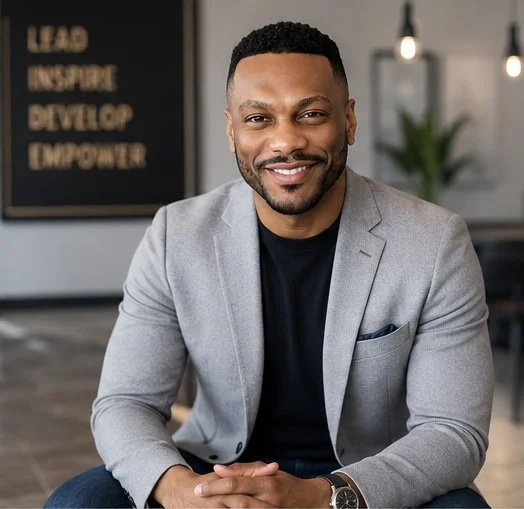
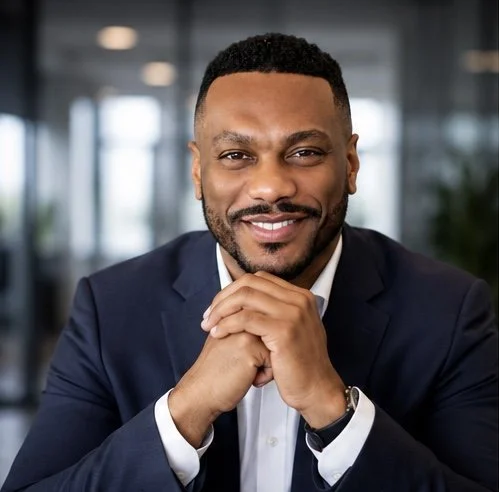
Meet William Bond Jr.
I'm William Bond Jr.—an author, leadership strategist, entrepreneur, and coach.
My work sits at the intersection of people, leadership, learning, performance, and organizational development.
But if you asked me what I really do, I'd put it simply:
I help people lead people better.
I believe leadership is about more than titles, processes, and performance metrics. It's about the experience we create for the people we're responsible for leading.
And when leadership is done well, people and performance don't have to compete.
They strengthen each other.
WHY I DO THIS WORK
I've Seen the Gap Up Close.
Throughout my career, I've worked in environments where leadership isn't theoretical. The decisions are real. The expectations are real. The pressure is real.
And the impact leadership has on people is real.
I've seen talented people become disengaged. I've seen capable managers struggle after being promoted into leadership without being given the tools to actually lead.
I've seen leaders who genuinely care about their people struggle to communicate that care in ways their employees could actually feel.
And I've seen what happens when leadership gets it right. People become more confident. Teams become more connected. Conversations become more honest. Performance improves. People begin to believe that they belong.
Those experiences shaped the way I think about leadership today.
They also led me to a question that continues to influence my work:
What happens when we pay as much attention to how people experience leadership as we do to what leadership is supposed to accomplish?
That question is at the heart of everything I create.

MY LEADERSHIP PHILOSOPHY
People Don't Experience Your Intentions. They Experience Your Leadership.
I believe most leaders care.
The problem isn't always a lack of care.
Sometimes it's a lack of understanding.
A leader can intend to recognize someone and still miss what makes that person feel valued.
A manager can believe they're communicating clearly while their employee walks away confused.
A leader can want to create psychological safety while unintentionally creating an environment where people don't feel safe speaking up.
The intention may be good.
But the experience is what people remember.
That's why my approach to leadership focuses on closing the gap between:
What leaders intend and What people actually experience.
For me, better leadership isn't about becoming perfect.
It's about becoming more intentional, self-aware, human, and effective.
WHERE PEOPLE AND PERFORMANCE MEET
Leadership Should Feel Human—and Still Deliver Results.
I'm passionate about the human side of leadership, but I'm equally passionate about performance.
Because empathy without accountability isn't effective leadership.
And performance without humanity isn't sustainable leadership.
The strongest leaders understand that people aren't separate from business results.
People create the results.
That's why leadership development should help managers do more than feel inspired.
It should help them:
Have better conversations
Give meaningful feedback
Coach with intention
Build trust
Recognize people effectively
Develop talent
Navigate difficult situations
Create stronger teams
Improve engagement
Connect people development to performance
That's the kind of leadership development I believe in:
Practical enough to use. Human enough to matter. Strategic enough to make a difference.

MY EXPERIENCE
Learning Leadership in the Real World
My professional experience has given me the opportunity to work across learning, development, operations, leadership, and organizational strategy.
I've worked within organizations serving 12,000+ employees, developing and supporting strategies designed to strengthen the connection between people and performance.
That experience has reinforced something I believe deeply:
Leadership development cannot live in a classroom alone.
It has to show up where leadership actually happens.
In the one-on-one.
In the coaching conversation.
In the team meeting.
In the difficult feedback conversation.
In the decision that affects someone's career.
In the moment when a leader has to choose between simply managing a situation and actually leading a person.
That's where leadership becomes real.
What I’ve learned about leadership
Leadership is experienced, not announced.
Your title may tell people that you're the leader. Your behavior tells them what kind of leader you are.
People want to know that they matter.
Recognition, trust, respect, and connection aren't extras. They influence how people experience work.
Accountability and empathy belong together.
You can care about people and hold high standards. In fact, the best leaders do both.
Managers need development too.
Being excellent at your previous job doesn't automatically prepare you to lead other people.
Culture is built in everyday moments.
Culture isn't just what's written on the wall. It's what people experience repeatedly.
Better leadership is a practice.
There is no finish line where you officially become a great leader. There is always another conversation to have, another lesson to learn, and another opportunity to lead better.
WHAT I BELIEVE
THE WORK AHEAD
There's Still More to Build.
I'm interested in the questions that don't have easy answers.
How do we build leaders who can deliver results without losing the human connection?
How do we help managers become confident coaches instead of simply task managers?
How do we create cultures where people feel valued without sacrificing accountability?
How do we make leadership development practical enough to survive the realities of a busy workplace?
And perhaps most importantly:
How do we help more people understand that leadership is not just about what happens at the top?
It's happening every day.
In every conversation.
On every team.
With every person who has been entrusted with the responsibility to influence someone else's experience at work.
That's the work I'm committed to.